


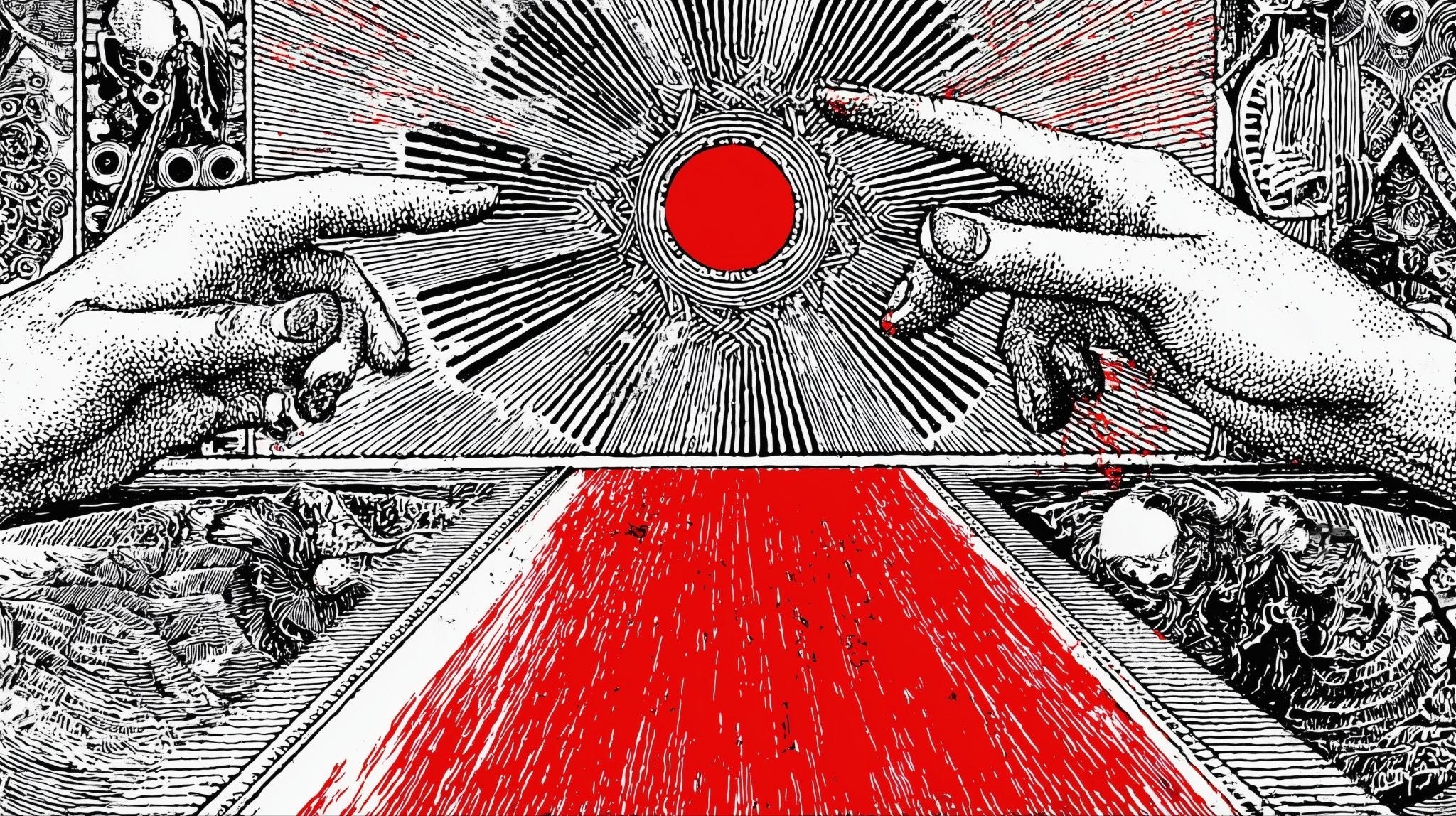
I learned to draw will-lines through addiction. Drawing the line requires a lot of effort, but once it is drawn clearly without any gaps, following it is easy. I don’t have to think about whether to smoke anymore; the decision is made. It is my will not to smoke.
The most common application of will is in this negative capacity. Ask someone about the moments that changed their life, and you’ll hear refusal before ambition: “I couldn’t keep living like that.” The body draws the line before the mind has a plan. It’s much safer to say no than to say yes because the future has many moving pieces, and it’s easier to know which ones you don’t want. Religious commandments figured this out early: thou shalt not. The positive application of will is what some weirdos call magic(k), “the art of causing change to occur in conformity with will”.
Last year, I decided to take writing more seriously and publish every two weeks. What surprised me is the strength of the commitment: I haven’t missed a Publishing Thursday despite travels and retreats. Instead of postponing the deadline, my system snaps into overdrive whenever necessary. This is a smaller line than quitting smoking, but the mechanism is the same: once drawn, following it is easy. Even if there is still friction in enacting it (I just ate half a loaf of bread for dessert to distract myself from the resistance towards writing this), the line holds.
The resistance towards writing isn’t coming from the same place as the commitment. The part of me that escapes from the empty page to the kitchen operates at a lower level than the one that decided to publish every two weeks. Once you notice the diversity of willing inside yourself, you start seeing it everywhere.
The World as Will
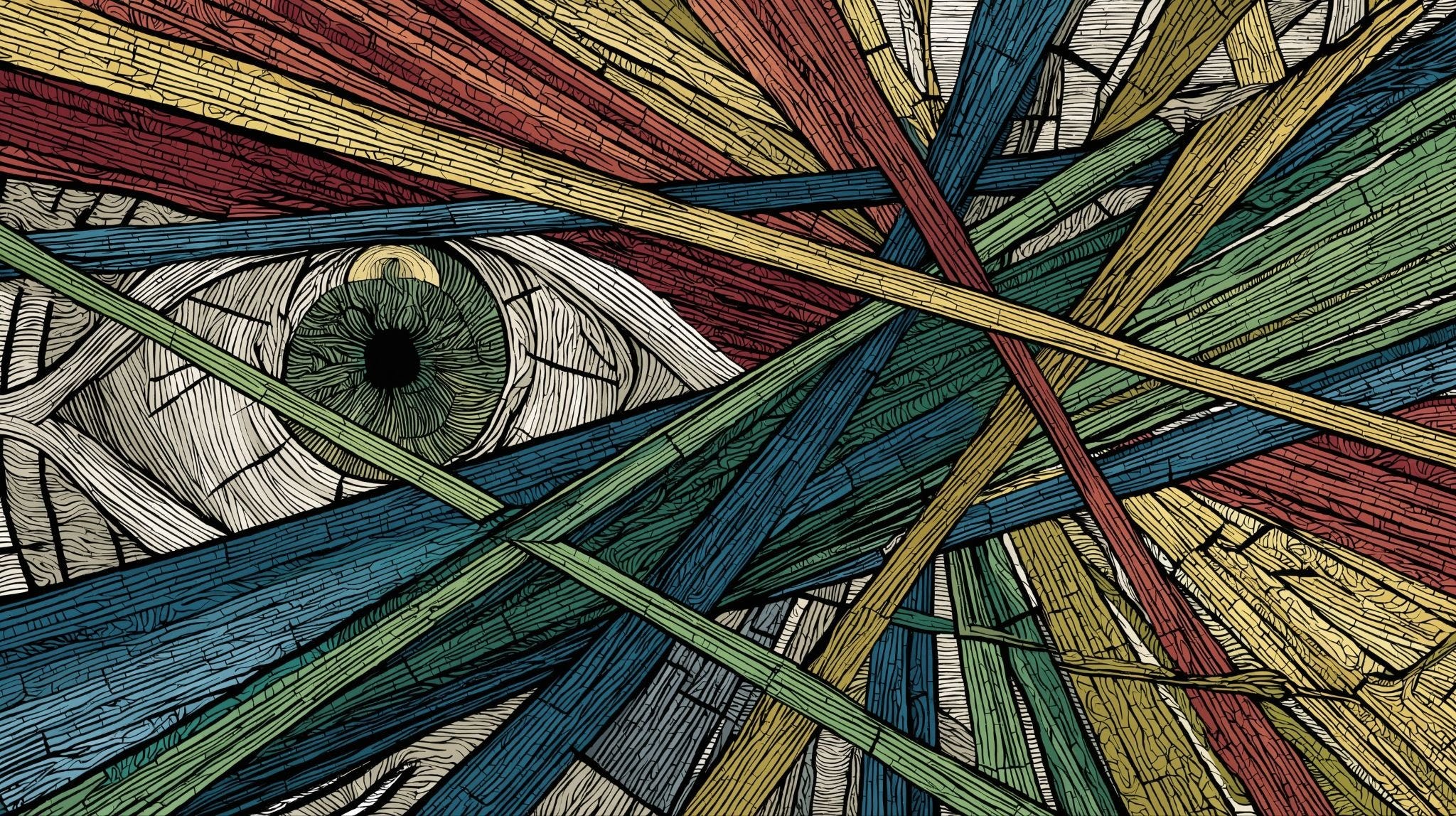
Will-lines criss-cross around us, above and beneath us, through us. Hunger and thirst are not yours, but the will to live that life itself has smeared over anything that breathes. Sexual desire, ambition, or the will to develop are all transpersonal; you are merely the pen that extends them another stroke. Even gravity could be seen as the will of matter to soothe itself with touch.
Those lines don’t just cross on a flat plane; they stack. Each holon includes the ones beneath it: matter in biology, biology in minds, minds in the techno-social fields we swim in. The will to live runs continuously: Your gut bacteria want sugar, your nation state GDP, and you’re in the middle, thinking about lunch. Another line, the will to reproduce, bends as it passes through new levels, becoming eroticism and even art (evolution is still in shock). A chicken might stay attuned to a seed across a yard while adapting to changes in the environment. You might hold a ten-year intention to see a painting on the other side of the planet while also wanting Pad Thai.
Schopenhauer lost hope when he outlined a similar view because he saw a single, blind force tearing through itself from every angle. I might have agreed when I was still getting high every day and calling it a lifestyle. There is both order and choice, but they must be earned. As new layers of complexity emerge, they are initially highly dependent on their predecessors. The emotions we had as children provide the blueprint for our personality. But as the personality forms, it can increasingly regulate the emotional layer.
While a part can only hold one emotion, the self can hold several at once. Groups can hold internal ideological contradictions better than most people (who tend to pick sides). Each holon holds more contradiction once the will-lines in the layers below have aligned enough to provide a floor for it. That’s why a higher level of emergence can influence the layers beneath it by default (biology rearranges its own matter all the time). The harder direction is upward. A lower layer can only reach into the one above it through an excess of coherence, a surplus generated by a high degree of internal alignment. With enough clarity and determination, the individual can change the direction of the group.
Egregores are particularly good at enlisting you in their will because they come with a built-in enemy. You feel like you are opposing an egregore, but you are actually supporting it because you are only seeing a part. For instance, AI salvation vs. AI doom look like opposing camps, but they’re one organism. Every leap in capability is used by both sides since more power means more magic and more danger, and each side points to the other to justify its escalation. The conversation stays on AI either way, which is all the egregore needs. I can feel both heads pulling inside me. I’ve workshopped this very example with Claude (oh, sweet irony). I’m drunk on my new capacity to churn out landing pages while I’m embarrassed about the perfectly smooth inconsistencies in my website copy. And most of all, I wonder how exactly a late-night exploration of Landian k-tactics quietly turned into a pitch for coaching credentials.
Your own will lives in those glitches, the contradictions where the rhetoric and your experience diverge. That resistance holds the key to what the next level requires, like the resistance towards quitting was pointing to my unintegrated parts. The goal is not to singlehandedly resolve the polarity at the heart of an egregore but to stay in the contradiction to fuel your own will.
Use that fuel to extend your will downward. This is why every serious training system starts in the same place: teaching ideas to reach into feelings and perception. Whether you are practicing gratitude or finding the boundary of awareness, you are training your symbolic layer to reshape your emotional and somatic layers rather than leaving them as reactions to circumstance. First, you learn to will downward into your own layers. Then, the surplus coherence that is produced enables you to will upward into the world.
Midas Had Great Aim
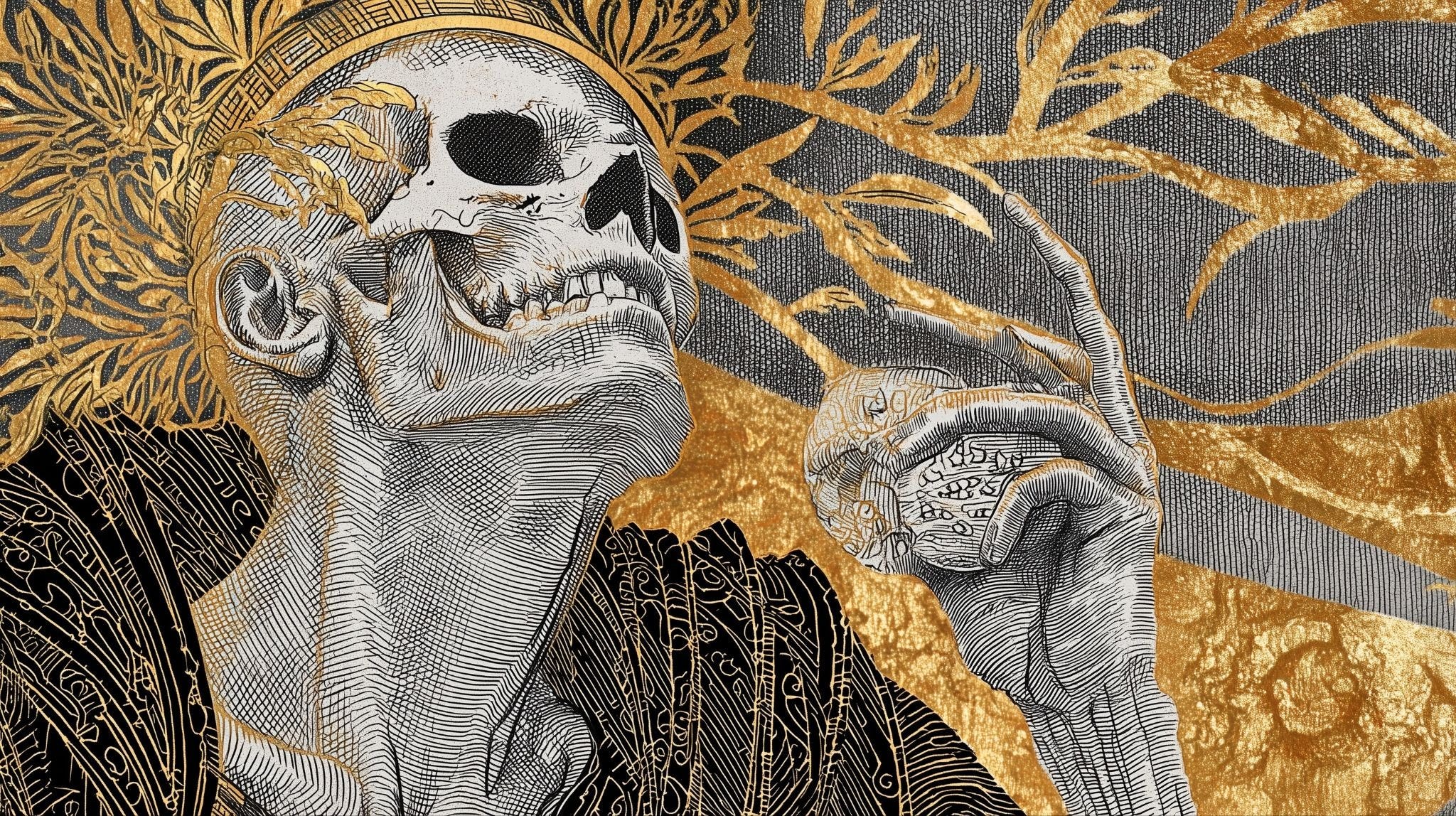
Choice is real, even if squeezed between hurt parts from below and two-headed egregores from above. But most people who pick up the pen botch the line.
On one extreme sit Goggins, Robbins, and other willpower enthusiasts with arteries throbbing over their temples. The assumption is that your target is obvious (get ripped, get rich, get laid) and the only variable is force. Will becomes a matter of suffering enough to deserve what you already know you want. On the other extreme, the dreamers luxuriating in pure potential on a batik blanket at a psi-trance festival, convinced they are every possible version of themselves across the multiverse while visibly being one very specific guy with a henna tattoo.
Hegel’s synthesis between these extremes is that every act of will holds three moments at once: the pure indeterminacy of a self that could commit to anything, a commitment to something particular, and self-determination. Will has to stay free inside its own commitment, or it becomes a trap. This is why people get divorced.
Being too specific in your will is what usually goes wrong once somebody actually puts the pen to the paper of their life. The Trojan War is not the only disaster that ensued after somebody bullied the universe into being with that specific person. Every fairy tale about getting what you want is a horror story. Midas got exactly what he asked for, and it killed his daughter and himself. The monkey’s paw grants every wish in the worst possible way. Will aimed at a specific thing works surprisingly often…It’s just that the thing arrives on its own terms.
To draw a will-line is to cut into the future, and the question is how broad or narrow to make that cut. Sometimes, the risky move of aiming for a specific person, relationship, or job may be worth it. But generally, the best target for the application of will is a felt sense. Aiming for a certain feeling tone (say, the smell of potential around every corner while simultaneously having nothing to prove) is much less likely to misfire than gunning for something specific like a job at Anthropic. If aimed at a feeling tone, the self-determined will can change direction without losing the continuity of the line, and it can tap into larger will-lines that a brittle target would miss.
The most powerful will-lines are the ones that draw lines at several levels of the fractal at once. While drawing towards a personal target, emergence at the social level and beyond can be harnessed, coordinating in/dividual will with something that doesn’t exist yet, an institution or a movement before it has a name. Vitalik Buterin cried himself to sleep when Blizzard nerfed his warlock’s Siphon Life spell, and his nerd rage became Ethereum. He wasn’t aiming for a global coordination protocol worth hundreds of billions. He was following a felt sense that what you build shouldn’t be destroyable by some guy at Blizzard. It just happened to align with tectonic will-lines in the techno-social sphere. When your will aligns with an emergent will in the layers above, it feels like you have the mandate of heaven and everything clicks into place around you.
Desire Is Muscle, Will Is Bone
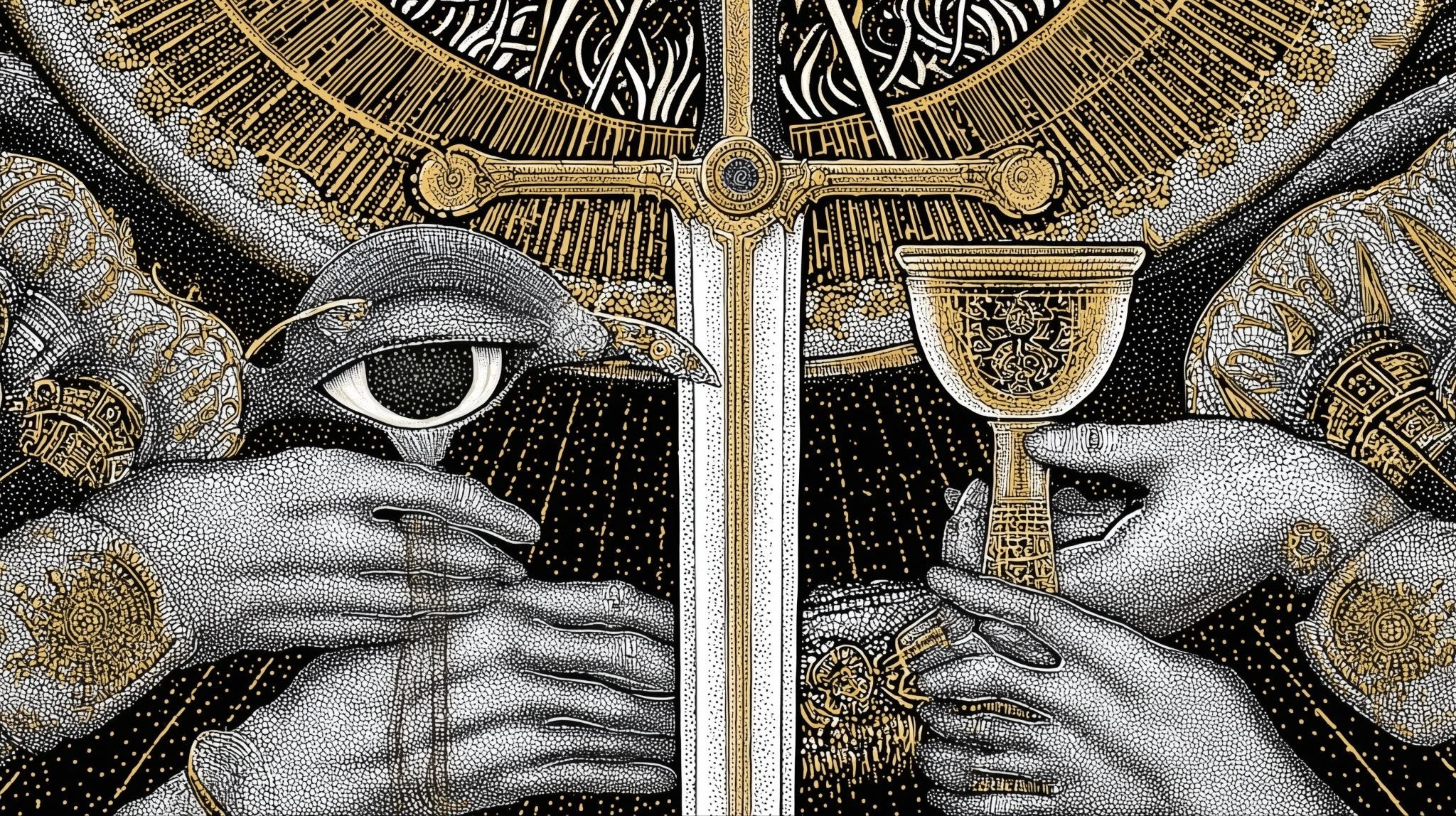
Willing effectively uses all four tools of the magician. The sword is about aim: discernment about what we deeply want, and what shape to cut into the future. It’s also the art of evading opposing lines and harnessing aligned ones. One of the moves that helped me beat addiction was to look for a deeper, more powerful will-line, aligning myself both with the will to live from below and a will for flourishing from above. I had to be very clear about what I wanted in life and how the addiction was preventing that. The cup is Hegel’s self-determination element: the capacity to update your will without abandoning it. Without it, you end up hacking blindly at the future, or worse, becoming Tony Robbins.
Cutting into the future requires energy. The wand is about generating will-power. Hustle-bros assume this means whipping yourself into action, but manufacturing charge should be the last option (and I’d probably go for breathwork instead). You can use existing resources. The obsessive energy that used to be my addiction is currently powering my writing. I didn’t learn a new way to generate force, but redirected the one I already had. Once the will-line of addiction was broken, the energy locked up in it went feral. Desire is will in its liquid state, looking for a mold, and it will find one whether you choose it or not. I could have picked a worse one than writing confessional essays thinly veiled as weirding philosophy.
Desire is the most natural source of energy for will, and it crystallizes into it with or without intention. When desire is locked up in the will to smoke, the cigarette is the clearest thing in your future, sharper than any plan or ambition. Desire without will is craving, and will without desire is impotent. The trick is to let desire generate the charge while will holds the direction. Desire is muscle, and will is bone. Crowley’s “Love under Will” is desire with a skeleton.
The pentacle is sacrifice. After I quit weed, I went for a walk along the river with a friend I used to spend a lot of time with. I could feel the absence of the joint viscerally; I knew exactly where on the path we would have smoked it. His giggle was the same, but everything else was gone. The conversation had degraded to life updates without context (he changed jobs and got a new bike). We never texted again after that walk. He must have felt it too, because he asked me for investment tips at the end, as if squeezing the last bit of utility out of a connection that no longer had a reason to exist.
Drawing my will-line didn’t just cross his, but it cut through my story of the past and revealed what had actually been there (and what had not). That’s horizontal resistance: will-lines crossing at the same level of complexity. Every line you draw crosses someone else’s, and the crossing can lead to loud conflict or quiet fadings.
Resistance is not just something to overcome; it carries information. When a will-line crosses a level of emergence, from the personal to the social, the resistance points to what needs to be integrated to connect on the higher level. To draw my will-line against addiction, the resistance pointed me to parts that needed attention, like how I dealt with uncertainty. You can be a flowy Taoist after you have drawn the will-lines that matter to you. Chances are, your pen stays sharp most of your life anyway.
“To go with the flow is to go down the drain” - Adi Da Samraj
Love Under Will
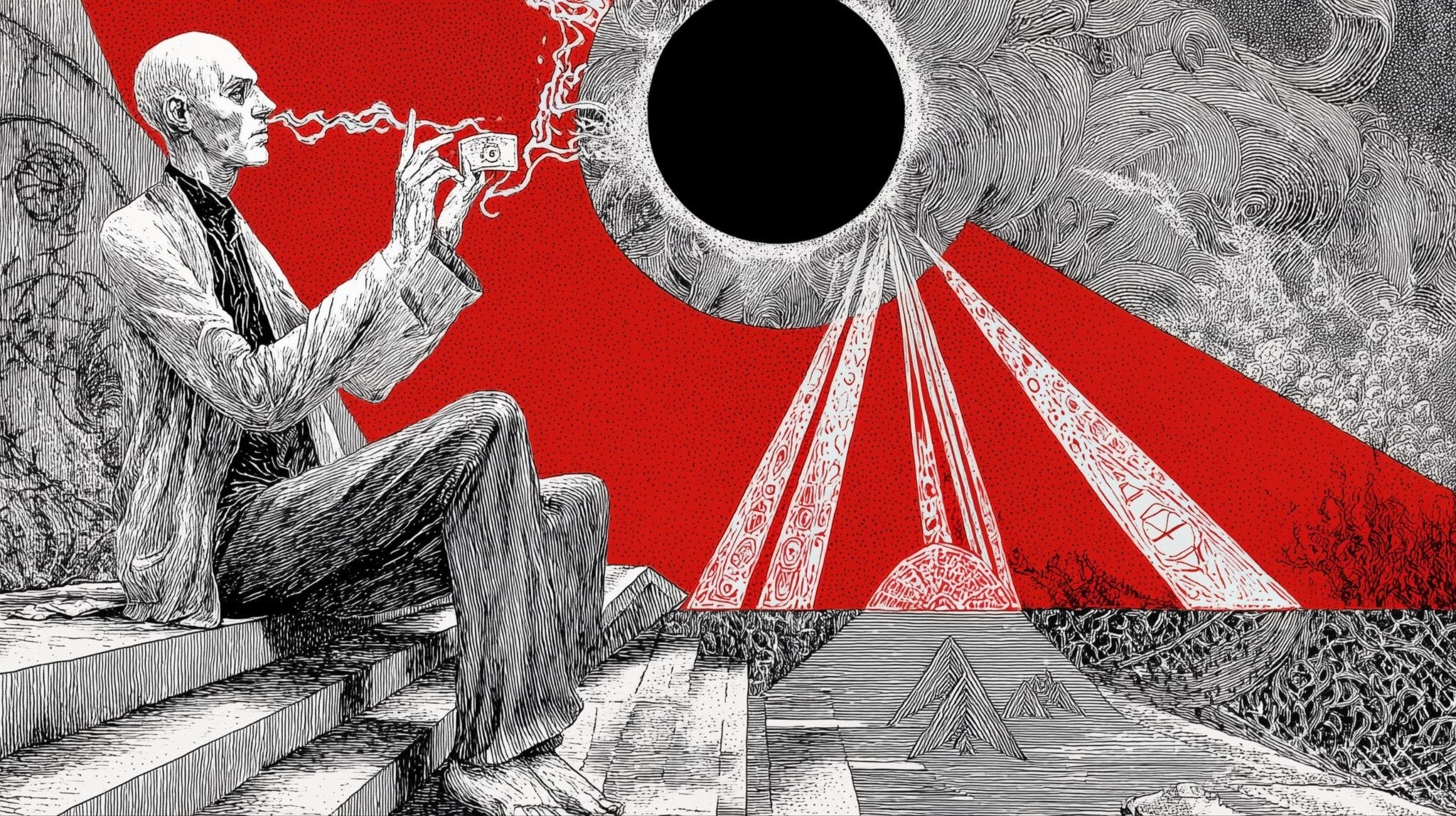
That walk along the river left me with grief and relief in equal measure, and neither would give way to the other. Resistance points the way and, as Gurdjieff proposed, also generates fuel: the friction between two opposing will-lines becomes a charge that can be harnessed if you hold the tension rather than collapsing to one side. Below you, this looks like integration. Two competing emotions don’t cancel each other out if you can hold both. They fuse into something with more dimensionality than either had alone, and the energy that was spent keeping them apart becomes available. Above you, the move is different: You can’t metabolize an egregore the way you metabolize your own parts, but you can resolve the echo of that contradiction where it lives in you and stop being food for either head. The charge you reclaim was yours all along, just previously allocated to maintaining your position in someone else’s fight.
Layman suspects that the Thelemic “Love under Will” points at this process: love as the enacted fusion of things that don’t naturally combine, made possible only because the will held them together long enough for the chemistry to work.
You can follow it all the way to a strange inversion: the line bends with each integration until it curves into a torus, crossing into a higher layer of emergence. That’s the geometry of love under will. The other half of the loaf is still in the kitchen, and I’m going for a slow slice this time.
This post was co-composted with Layman Pascal
Ink Trails:
Desire is the muscle (DICE it up)
Pan and Moloch are the egregores you’re most likely to feed
Every line wants to close into a torus

Also where are your illustrations from if I might ask?
This essay is beautiful you are one of the people carving a piece of the infinite fractal mystery. What you are writing about is also elusive because there are probably infinite words to describe it. Wonderful essay!