


I went back to voting after not giving a shit for years. I used to argue that my non-vote was against the system, but at some point the argument that democratic slackers like me were the on-ramp to authoritarianism must have convinced me (or was I just tired of arguing?). Nowadays, filling out my voting materials, I notice I still don’t give a shit.
If you’ve been reading along, you’ll know it’s not for a lack of opinions. I don’t give a shit because it feels like my vote one way or the other is irrelevant. More importantly, none of the pre-selected candidates or parties represent me. Do you feel represented? You’re being forced to choose between Coke and Pepsi as your democratic duty, even if the choice comes down to which logo you like better.
That’s not really a democracy. If the power was really with the people, like the word promises, that would feel differently and also produce better results. Democracies and dictatorships should not even be in the same league, yet they are. From first principles: if we correctly combine the knowledge and wisdom of millions of people, a single individual should not stand a chance in the quality of decision-making. If that difference is not obvious, we’re not doing it right. Counting votes is such a primitive form of aggregating information that it’s not surprising if its results are similar to one guy deciding. Posting on Twitter, holding Bitcoin, or playing D&D have more political weight than participating in the binary soda vote.
If we ever get around to building actual democracies, dictatorships provide a foil for them to measure themselves against. Our democracies should build faster than China and house people better than Singapore. The fact that monarchism has made it back into the overton window shows how much we are currently off target.
Windows 95 for Democracy

“Democracy” has come to mean a specific bundle of mechanisms and practices that are utterly contingent. The world’s democracies are running the equivalent of Windows 95. We haven’t undergone an OS update for centuries. Voting conventions and the current representative system stem from times where people needed time to ride in their horse to town and vote. There is also almost no variety. The UK, France, the US, and basically all Western democracies elect pre-selected persons at intervals into the same three branches, with the legislative just about always split in two. What are the odds that Montesquieu just landed on the best system possible?
The envelope I keep not caring about is Swiss. Switzerland is the exception everyone points to as the boldest variation of the democracy template yet: an executive committee of seven passing a ceremonial presidency around like a chore wheel, and anything can be put up to a vote with signatures from about 1% of the population. Four times a year I get a yes/no question about farm subsidies or fighter jets (mostly no). If one of the half-baked ideas passes, parliament spends the next four years implementing whichever version contradicts the rest of the constitution least (yes, popular votes go into the constitution even if they are about building codes). I wasn’t an outlier in not bothering to vote for years: 45% participation is the lowest in Western Europe. The mechanisms are mediocre but the point is that we changed them and nothing exploded. Instead of the soda binary, we get the addition of Sprite and Fanta (yay).
There is no shortage of ideas for what else could be on the shelf. However, even basic upgrades like digital voting are stubbornly delayed. There is a lot that could be learned from software architecture e.g. avoid bundling too many changes in one PR, don’t test in prod, and periodically refactor old code. Instead, we have legal bills that bundle unrelated issues and get rolled out to the entire country at once. There isn’t a good process to remove obsolete law, which is why Section 228 of the Kentucky Constitution still requires everyone taking office to swear they have never fought a duel with deadly weapons.
Kick some royal ass
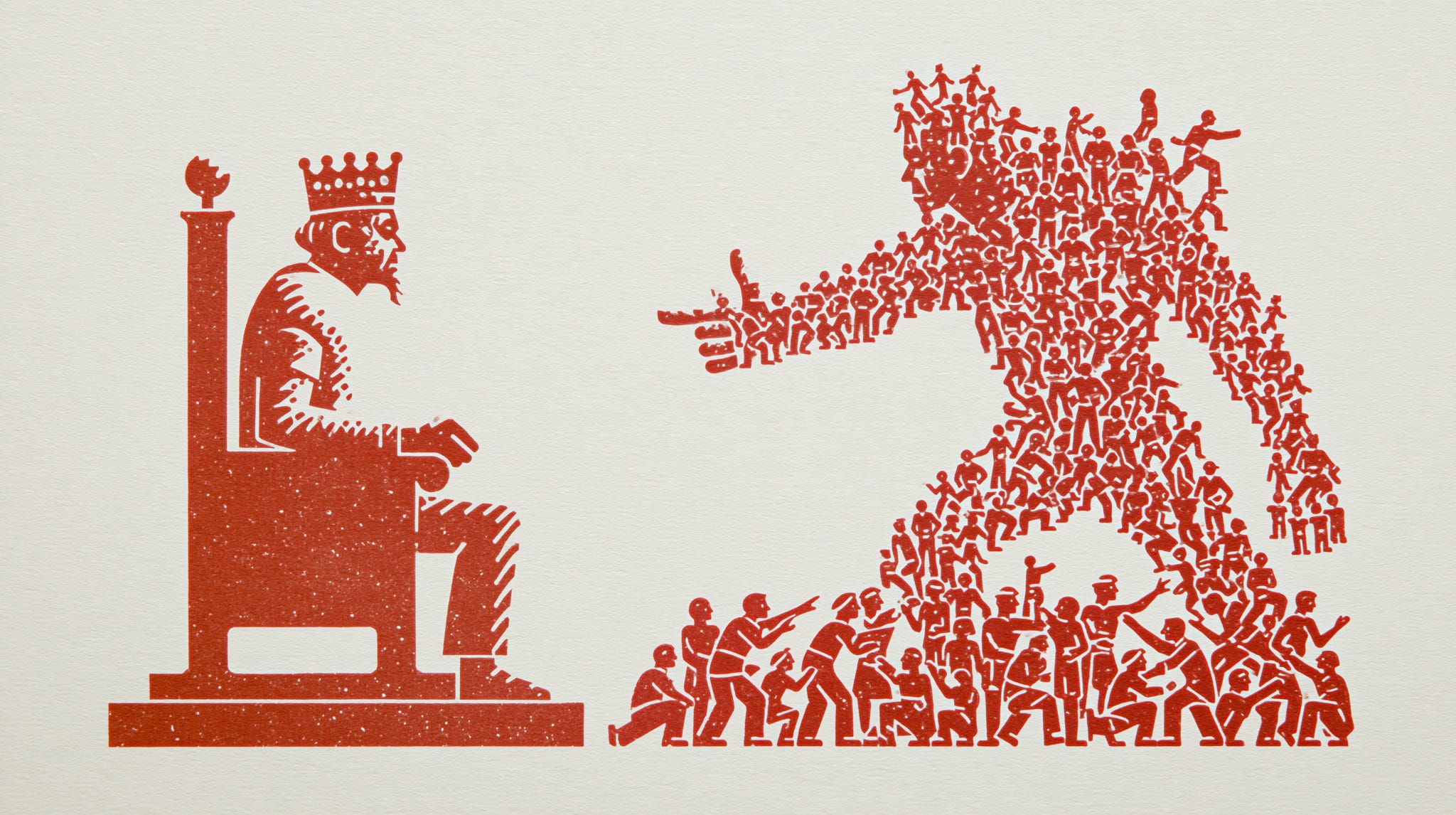
Meanwhile, Lee Kuan Yew, a seeming philosopher king, got Singapore on track to increase its GDP per capita from below Mexico to now above the US, and built the world’s most impressive airport. The problem with philosopher kings is that sooner or later, they either get drunk on power and lose touch with reality, or they die. Succession is a roll of the dice and you’ll eventually get a stupid and/or evil king. At that point, the monarchists realise that we need something more robust. Are we approaching this moment with Trump, whose mob rule has eroded the separation of powers and led to the former vanguard of Western democracy becoming as reliable on a policy level as a third world country in the midst of a civil war?
If we want to properly kick some royal ass, we’ll need deeper changes than a few efficiency tweaks. The way we do voting turns politics into a popularity contest that rewards populism. The deeper problem isn’t that we vote badly, it’s that we vote about everything. A 51/49 outcome leaves half the country unhappy instead of looking for better solutions. A mature system would read a margin that close as evidence it asked the wrong question. Forrest Landry argues that we overrely on voting, and that a simple majority works best as the failsafe for what meritocracy and consensus couldn’t settle. We built our democracies on the exception handler. Taiwan ran a group-informed consensus method through Polis during the Uber fight, where two camps that agreed on nothing else both wanted passenger safety, and that’s what the regulation got built on. Nobody voted because the job of the mechanism was to find shared agreement instead of measuring differences on a pre-formulated question.
Landry’s other two layers are where the juicy mechanisms cluster. Liquid democracy is a meritocratic mechanism that lets delegation flow freely across the population instead of being represented by career politicians. On trade policy, I might delegate to my friend who studied macroeconomics, who passes it on to his professor, who hands it to a published expert on the long term effects of tariffs. The power flows to where the knowledge is and I can re-delegate the moment she says something stupid.
Voting still makes sense when a disagreement can’t be resolved. But there are better ways of voting that register how much I care. The same “no” might mean a slight preference or that I will leave the country if the vote doesn’t go my way. Quadratic voting gives everyone a budget of credits and prices intensity: one vote costs one credit, three votes cost nine. You can get disproportionate power by getting rekt on the one issue you actually care about. Voting is where all our decisions currently get made, which makes it the right one to fix first (even if we ultimately want to move beyond it).
Our current democratic systems are way off from what they could be and it’s not because of a lack of ideas on how to improve. Those with the power to change the system, whether that’s political parties or their donors or candidates, would lose power if they pushed for a change. More fundamentally, our systems are not set up for experimentation. Constitutions enshrine current mechanisms and make change prohibitively hard. While this does protect from autocratic take-over, it also prevents innovation. The ability to test and roll out sequentially would also come in handy here. I wouldn’t recommend rolling out a custom cocktail of liquid democracy and quadratic voting to all of the US in one swoop. There is a governance cold-start problem: nobody wants to be the first to try (realistically, not even to explain) innovative methods. If nobody tries them, we will not get successful case studies.
I thought crypto would save democracy
I used to be excited about crypto because of the promise of not just new money but new governance mechanisms. I thought crypto would iterate its way into internet-native global institutions that would replace our current nation states (my optimism may have been fueled by rocketing prices at times). And there was some experimentation: Crypto ran most permutations on shareholder voting, including a truncated version of liquid democracy. From everybody voting directly on everything to different forms of delegation, plus a few obscure but intelligent tweaks like Polkadot’s Adaptive Quorum Biasing.
While there was more governance innovation in crypto over the last 10 years than over the last 100 years of nation states and corporations, I’m still disappointed. The breadth of the innovation was mostly limited to variations of existing mechanisms from democracies and corporations. I was particularly excited about bottom-up participation systems, where engaged community members could gradually amass decision-making power through consistently good input. But the forums where those conversations were supposed to happen got run over by speculators and DAO voting participation turned out to be an order of magnitude lower than Switzerland (token holders didn’t give a shit, and I don’t blame them).
There were some technical constraints to experimentation: for example, the lack of reliable identity and legal recourse made certain systems, including quadratic voting and even good old 1 person 1 vote, impossible to implement. But I suspect the deeper reason for the lack of variety is that building startups is hard enough, building them in an adversarial environment as open-source protocols is even harder, and innovating on governance at the same time makes the challenge practically insurmountable. That’s the charitable version of why Polkadot failed. That’s why gradually, most projects settled on a governance template of delegated voting and a security council; a stripped-down version of the current representative system. And once certain protocols grow big enough that token holders might care, they now don’t want to take the risk of an untested mechanism either. If there is nothing at stake, nobody wants to participate, and once there is a lot to lose, nobody wants to change the mechanism.
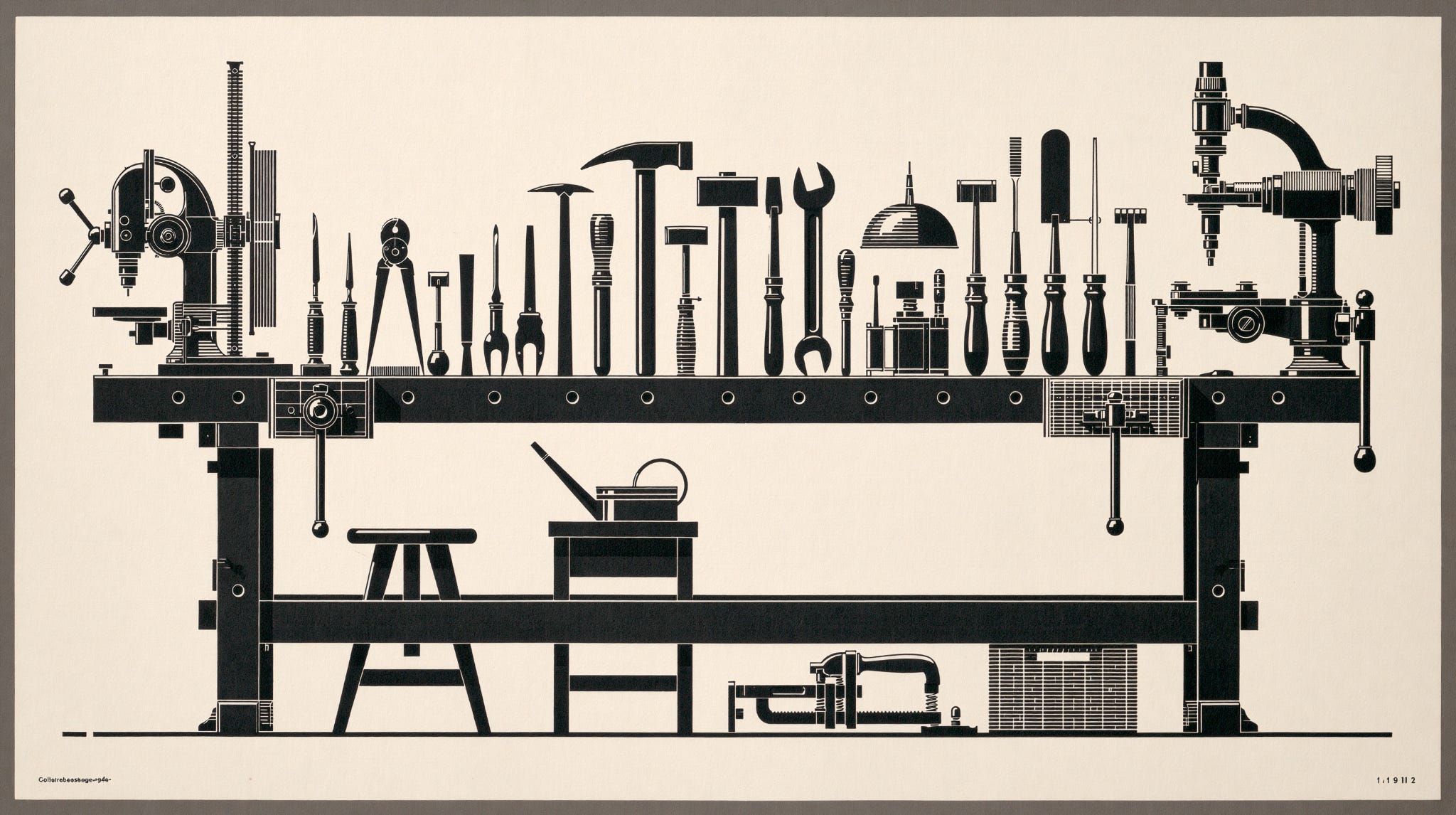
I thought crypto was building internet-native nations from the ground up but it turned out to be more of a machine shop. A decade of adversarial experimentation did produce some mechanisms sturdy enough to apply somewhere they matter. The most interesting innovation happened in funding mechanisms, like Gitcoin’s quadratic funding, RetroPGF or MetaDao’s futarchy launchpad. I spent years waiting for crypto’s garage casino to turn into a country instead of applying the parts that worked elsewhere.
Fork the World Bank
I schemed with a fellow governance nerd who has a view from the inside, and here is our hot take: We think that the best place to innovate on governance is not the nation state, not crypto protocols, not corporations. It’s the multilaterals, the layer where states collaborate on issues that spill over borders. The World Bank, the WTO, the OECD, the alphabet soup in Geneva and Washington.
The issues in their mandate are recognised as important, with serious budgets behind them, but they are rarely existential. The OECD collects economic statistics, it doesn’t run your power grid. That puts them into the Goldilocks zone between the two failure modes I’ve been describing. Crypto had nothing at stake (voter apathy) except when things worked out and nobody wanted to touch the rules of the game anymore (if Bitcoin gets hacked by quantum computers, that’s why). Nation states have everything at stake, which is why their constitutions are built to resist innovation. The constraints that strangled crypto’s sandbox also dissolve at this layer. Quadratic voting was impractical on-chain because there was no reliable identity; one person could be a thousand wallets (and often was, industrially “farming” reward programs). A multilateral has limited known members and at least some legal recourse.
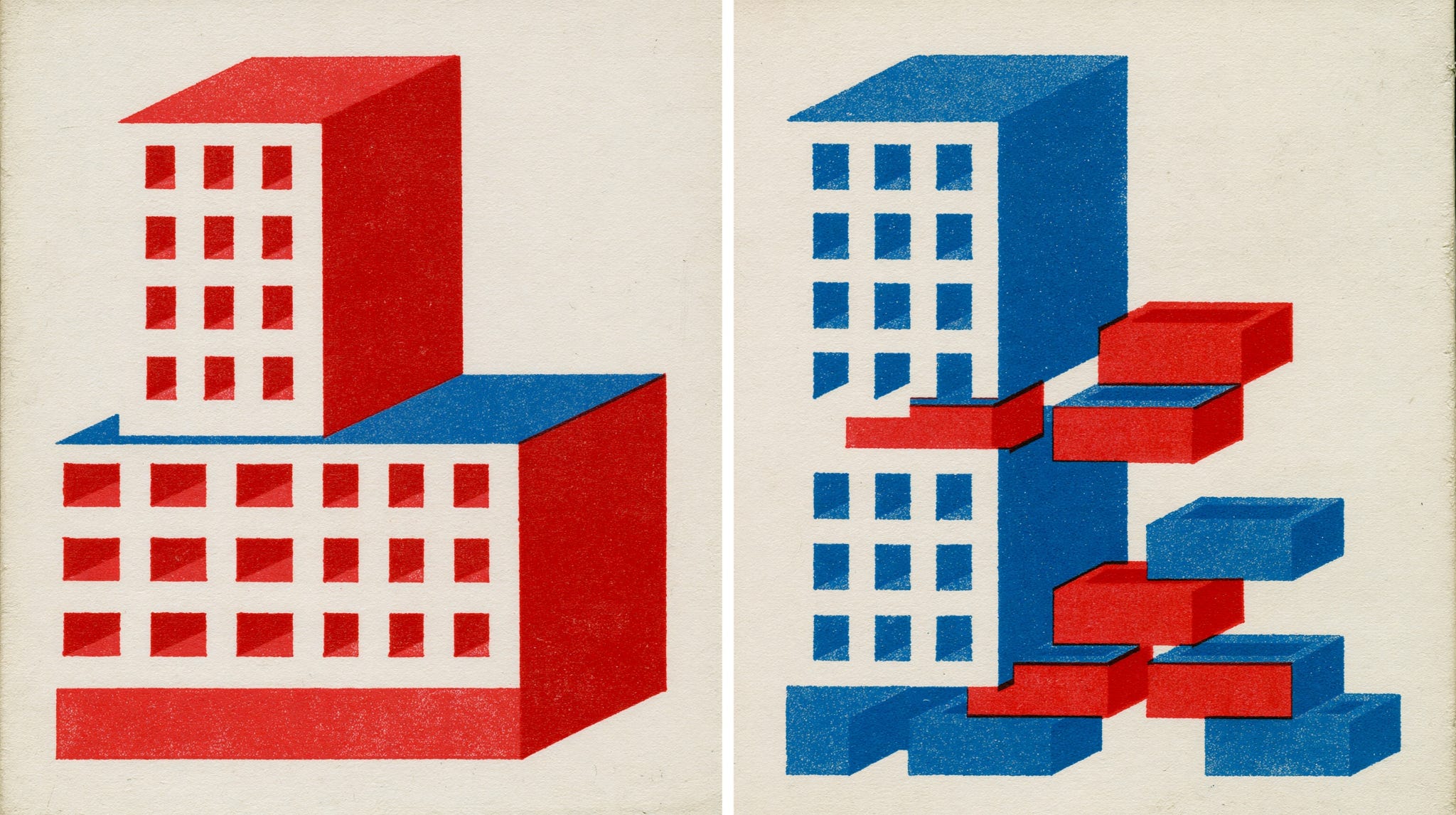
What about inertia? Yes, multilaterals are among the most sclerotic orgs on earth. The UN Security Council veto has been frozen since 1945, and don’t ask why the World Bank’s president has been American since Bretton Woods. We’re not suggesting reform but a fork. When China got tired of waiting for a bigger vote share at the World Bank, it founded the Asian equivalent of it and fifty-seven nations joined despite the US telling them off. Contrary to most citizens, states can exit multilaterals and join overlapping ones. Hirschman’s voice and exit are both needed for the feedback loops of innovation to work: Without a credible threat of exit, there is no pressure for change and nowhere to take new ideas. At the multilateral layer, a mechanism that leads to better decision-making and stronger agreements will win away members and budgets from its zombified siblings.
The forks are coming either way: as the US withdraws contributions to focus on la cosa nostra, the remaining members can no longer count on the world police to settle their disagreements and must generate legitimacy on their own. At the dawn of a new multi-polar world, new coalitions and alliances will create institutions with new membership structures as we’ve seen with the Asian Infrastructure Investment Bank. The opportunity we see is to not just create a different loyalty club, but innovate on the mechanism level.
The world bank runs on weighted voting by capital share; whoever pays the most decides where the money goes. Imagine quadratic funding applied to development finance: donor money forms a matching pool whose funds flow based on the smaller contributions of recipient communities (countries, cities, or municipalities). The matching formula rewards breadth of support over the amount of money, so a thousand villages each putting some money towards rural clinics would outcompete one ministry putting a lot of money towards a new airport. This is the intensity problem from earlier, applied to infrastructure funding. Quadratic funding was battle-tested by Gitcoin, which allocated over $60M to open source projects. It proved the mechanism (mostly) works, even in an adversarial environment, making it ready to graduate from the sandbox and move more significant funds than crypto donors can provide. Gitcoin spent years fighting farmers for the identity layer the mechanism needs, and a development fund gets that layer for free from the fact that a Ugandan district council can’t be a thousand wallets. A development fund running on quadratic funding would be in deeper contact with its environment and allocate funds based on demand rather than the whims of the biggest donors. As it outperforms, states and budgets would follow. In ten years, I hope I’ll be able to express my disdain for a populist initiative with a quadratic vote.
Hedges are supposed to be boring
From the French Revolution to Caesar’s Rome, the king gets mad and the people take control, only for the new democracy to calcify and be captured by a new autocrat. Better mechanisms would turn this from a cycle into a spiral, power distributed a little more durably each time around instead of the same template rolled out again every eighty years. I have a whole policy agenda for boosting innovation while aggressively exporting the Swiss franc as a global store of value ready for anyone who will listen, but there is no way to contribute this without making my whole life about it. A mechanism like liquid democracy would let me make the case for it for a few afternoons and then find out how many people delegate to me on monetary policy (probably four).
Taiwan only let Polis touch a binding decision because it has an autocrat pointed right at it. No entrenched system innovates without necessity, and Trump gutting the multilateral order is the required opening. It’s the part of my argument I like the least: I refuse the accelerationist impulse to burn things down faster so we can rebuild on the other side. Voting for the mad king to speed up the rebuild is not a viable strategy because we could easily get stuck with that asshole for decades and there is no guarantee we’ll build back stronger after that. Autocratic regimes generate vast amounts of suffering, inadmissible as tuition for a mechanism design seminar that may never be scheduled. I vote to prevent regressive collapse. The vote is a hedge, not a steering wheel, and hedges are supposed to be boring.
This piece was co-composted with 3rd pole statecraft
Ink trails:
The binary soda vote is the Menu on the scale of society
Refusing to play the power game is also how the good guys win
Palaeolithic emotions, medieval institutions and godlike technology.
Thanks for the cogent and concise summary of the copious options for reshaping politics. We need more talk like this. Down with dystopian nihilism. A better world is possible!