


Maybe it’s because my hunger had been stoked by the delayed delivery, but the vegan paella on the second day of Inscribe’s writer residency was especially delicious. After rounding off the meal with a coffee and a peanut butter cookie, a thought of frivolous excess crossed my mind: “How about a second cookie?” An adult marshmallow test opened up the fault lines of different reward functions.
The innocuous impulse reignited a war between present and future self and I found myself torn between rolling my tongue in sumptuous taste for another round and having normal energy levels in a few hours. Akrasia, discipline, long-term planning are all about the coordination of selves across time. Why would present self sacrifice pleasure for future self? And if it wouldn’t now, why would it ever? I felt a literal band of tension in my chest: one action with a winner and a loser, and it may be much more consequential than it looks. I ate the cookie. Until very recently, I had also been eating chocolate ice cream every single day. Yet I’m the fittest I’ve ever been. I’m trialing a new psychotechnology for coordinating selfhood and I think it’s working.
The new part is the relational stance between my temporal selves. I had realized early on that overpowering with willpower isn’t sustainable, so I spent most of my adult life so far manipulating myself with clever hacks. A few years ago, I discovered trade relationships and I’m now starting to move into the next paradigm: trust. Each stance comes with its own bag of tricks, and I still use commitment devices and the occasional sleight of hand with myself, but now I do it from trust.
The Dark Ages of the Self
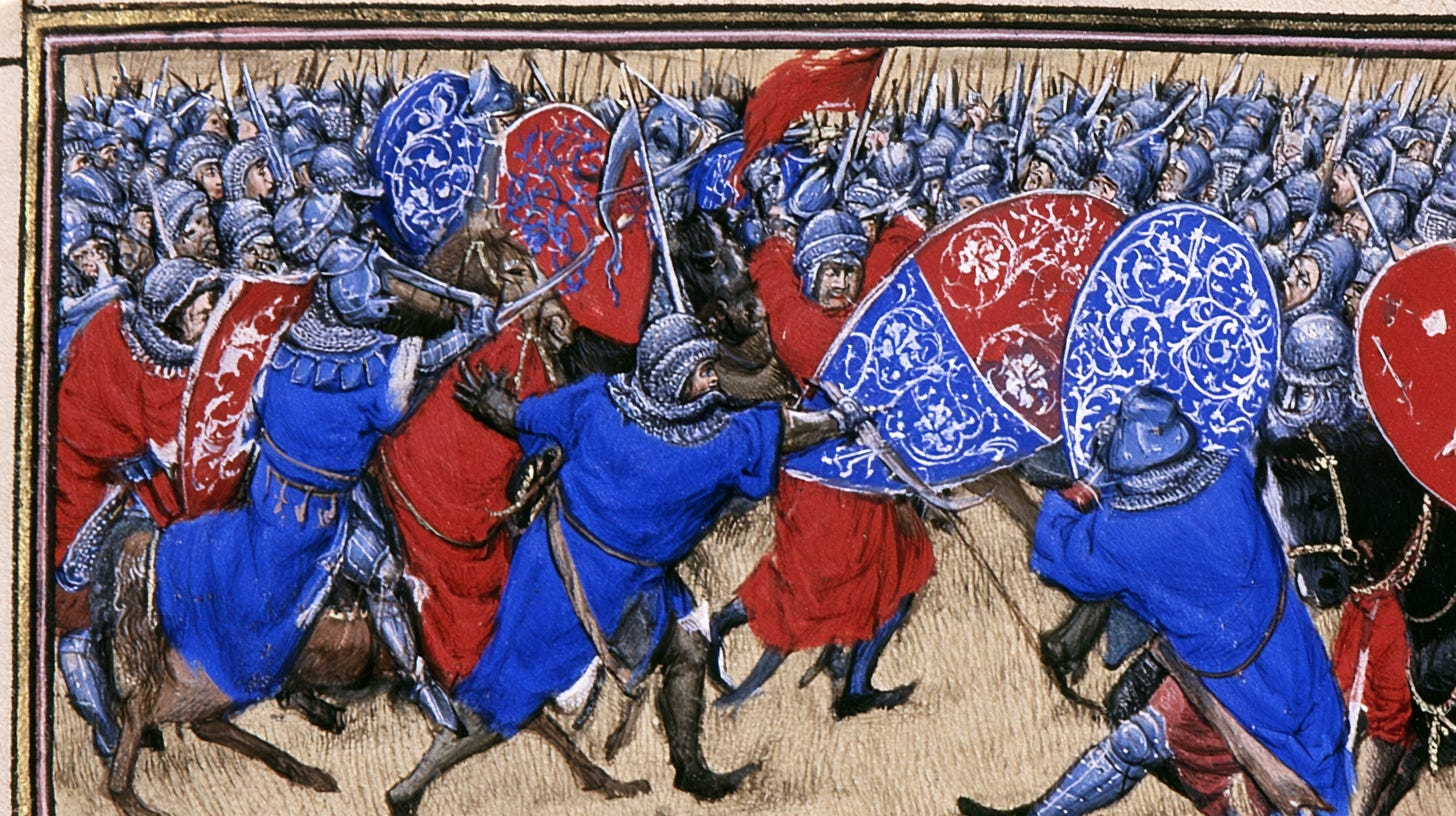
The Dark Ages of the Self were spent in an all-out war, and the present self kept winning until it was overpowered by parents, or the police for late bloomers. As most humans realize when they are about 4 years old, the collateral damage of this war is too large. The feudal age of selfhood is defined by the advent of willpower. Future self learns to reach through time and command the present self under the guise of the internalized parent. The Big Should is felt as a constant nagging demand for willpower to combat the relentless onslaught of desire born from the filthy gates of the senses. This is Freud’s reality principle subduing the pleasure principle, a process of domestication. Present self occasionally erupts with excess to protest its domination, and future self tends to concede a few vices to prevent that. Instead of doing breathwork and emailing founders, mine once stayed up the whole night binge-watching Foundation (despite my annoyance at the flat characters and the archaic-futurist awe porn I’d have sworn was Midjourney if the show didn’t predate it). If the Big Should seems to somewhat work for most people, it’s only because present self believes the threats. In reality, present self is in charge.
There are more sophisticated domestication techniques than the stick of the Big Should. Animal trainers mostly work with carrots, and positive reinforcement works just as well for domesticating humans.
Bind yourself to the mast
Try Duolingo if you want to taste the most sophisticated way of manipulating yourself into a good habit. Streaks, social comparison, variable rewards: they’ve got it all. The freaking owl gets a mad face on the app icon if you don’t use it for a few days. Most people are condemned to repeat the humiliating cycle of setting intentions and not sticking to them, whether it’s in the gym or with a language learning Tamagotchi. Only the initiated into the esoteric teachings of Tim Ferriss and James Clear have found a way to nudge present self into a ripped future. Techniques to achieve discipline without willpower can be split into two categories.
The first are commitment devices, like Odysseus binding himself to the mast to be able to hear the sirens. I meditated for 45 minutes almost every day for four years by means of a challenge where I had to pay my friend 50 bucks if I didn’t do it. He made 2250 dollars paid out in Solana and I meditated much more than I would otherwise have. Group workouts and retreats similarly work through social pressure. Telling everybody you’ve quit smoking recruits the same mechanism.
The second is environment design, which covers the major moves of Clear’s habit-building bible: making a desired action more visible and frictionless. I don’t know anybody who actually lays out workout clothes the day before, but having the meditation cushion placed prominently definitely works for me. I also tried Post-it notes to remind me of past intentions. One on my monitor tells me to “feel the body as a whole”, and I filtered it out after two days. So environment design has no real downside beyond a littered desk, but cues fade, and what I’ve found most useful is not having certain things at all: no chocolate in the house, no TV. The most durable environmental hack is living with people who have a lifestyle you want to emulate. I got in shape over the past years because my brother loves to move and it has become our main way of connecting.
Commitment devices, on the other hand, can backfire. They are helpful when they are supporting scaffolding, but they can become counterproductive if not well tuned. Once I’ve decided to go to the sauna, committing to stay until the hourglass runs out is helpful support. But I stopped my standing meditation challenge because I noticed I was checking off a to-do item rather than engaging with the practice. The structure felt too stifling and gave me low-grade anxiety. I wanted something that allows for slack and adaptability.
All the cookies
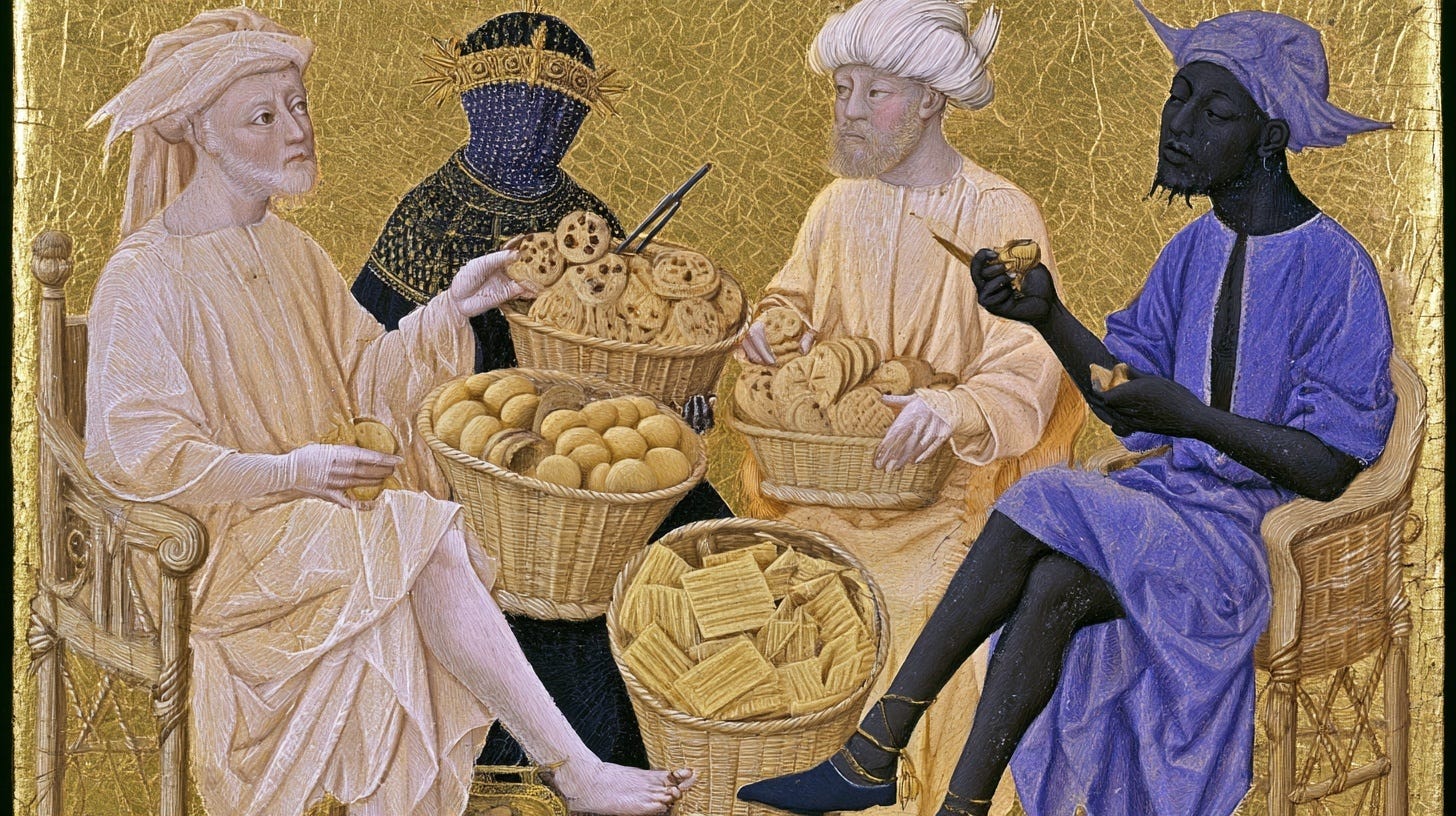
Hyperbolic discounting is the phenomenon of rewards becoming disproportionately more attractive as they approach the present. The chiseled back looks great from far away, but when my calendar says “workout”, scrolling on my phone suddenly seems like the better deal. George Ainslie has figured out a better way than force or manipulation: trade. His Picoeconomics applies economic theory to the relationship between present and future self to overcome the problem of hyperbolic discounting.
His solution works in the same way that game theorists found a way out of the prisoner’s dilemma: by turning it into a repeated game rather than a Mexican standoff. Ainslie’s move is bundling. If we make the decision about all cookies rather than this one cookie, being fat suddenly becomes so much more of a downside than forgoing one bout of pleasure that even the most asshole version of the present self would probably concede at least half the cookie. This is how I overcame my addiction: by actually believing that one joint meant being high all the time.
Bundling only works if the bundle is credible. Years of not being able to moderate with weed proved to myself that “just one joint now” really wasn’t an option. Once I accepted the bundling frame, it was remarkably easy to quit. Every time I wanted to smoke a joint, I remembered the past selves that held the line for my benefit and the enormous cost that I would cause for future self with my indulgence. Every time, I resolved to carry the torch forward into the next moment and stick with the decision not to smoke. Ainslie calls this recursive self-prediction: today’s choice becomes evidence about all the future ones. Over months and years of passing the torch, a new sense of solidarity and trust with myself has started to emerge.
But bundling cuts both ways: it can be undone by one single slip. Once I cross that red line, it’s all gone into the gutter, and I’ll be back to being a fat addict. A few months ago I was drunk at a party and wanted to smoke a cigarette (I had drawn the same line with nicotine). However, something was different this time. I trusted my gut, and I had the cigarette. I haven’t smoked again since. It seems it was actually an exception, not an “exception” that justifies the next one. That’s how my rule had died every previous time: it became as circumvented as the Jewish sabbath, with elaborate epicycles (“it’s ok with a coffee if I had too much to eat”), until I noticed how ridiculous it was and resigned myself to being a smoker again. Paradoxically, if it was actually an exception, that makes the line much more robust because a single relapse can’t break it any longer. What changed? I think it’s a sign of the next stage of cross-temporal selfing.
All of these techniques to hack our way into better habits have the issue that they constrain our future self. They assume we’ll know what is best for us in the future. Which is a bit rich given how volatile our times are. Are you sure that learning how to code or to drive is going to be as useful in the future?
No hard feelings, bro

My list of daily habits grew until I was supposed to do breathwork before meditation and yoga and ideally a cold plunge before dinner and drink my water warm (for obscure Ayurvedic reasons) and do kegels on my bike. If I actually followed it (I almost never did), past self would have spoken for half of my day in advance, without allowing for any adjustments.
Running my life from the stances of manipulation or trade relations also has a cost: at worst I’m constantly scheming, at best compromising and bargaining with myself. Imagine having to repay your parents’ contributions through a lifetime of payments, or paying your friends for the time they spend listening to your rambles.
Instead of feeling low-key guilty all the time about not executing on my ideal to-do list, I scrapped the whole thing and now mostly follow what feels good in the moment. How come I’m not doing drugs while masturbating and eating ice cream all the time? Because my sense of what feels good has become more refined than that (and each misstep further refines it). That only works because I’ve stopped pretending to know in advance. My habit list assumed past self knew what I’d need in the future. Trust starts from not knowing and being curious: How will I feel different after meditation? What will a second cookie actually do to my afternoon? Each choice becomes an experiment, and the feedback loop reports the result.
My daily ice cream streak stopped after a chocolate overdose: I had a piece of chocolate cake AND a hot chocolate at Starbucks. I felt physically sick afterwards and I soaked my body in that feeling so it would remember. It put a pause to my daily ice cream habit, but it hadn’t generalized to cookies yet. So when I ate the second cookie at the residency, I did it knowing I’d probably regret it: one more round of the sugar lesson and present self got to indulge a little bit. My energy dropped and my stomach felt heavy, and I took note while still doing my writing. The next day I didn’t want the second cookie. On the other hand, every time I meditate (without a timer, for however long it feels right) I notice how good I feel afterwards. These feedback loops make the trust stance work. The feeling of sickness becomes a note to future self
“this is what too much sugar feels like”
and past self gets absolved
“this is what your decision led to but I forgive you, no hard feelings bro”.
The feedback loop becomes an information channel between selves across time. Information flows forward from past to future, and resources flow backward from future to present to past. But not every message can be taken at face value. Some messages from past self come from a triggered, wounded part. The hot flashes that swept over my face after I introduced myself as a mentor in the residency’s opening circle held some information (my intro was miscalibrated to the audience). The reaction was exaggerated because the moment triggered past self, the one who got laughed at by a full behavioral economics class for eagerly answering the professor’s rhetorical question. This would have been an opportunity to send resources back to that embarrassed part (I’m doing it now). That’s also what changed at the party. I knew it was okay to smoke the cigarette because I knew the smooth salesman voice of the addiction, and its constriction in the throat, well enough to recognize that something more trustworthy was speaking: a subtler voice with a different timbre, which seemed to come from deeper down in the torso.

EX PRAETERITO / PRAESENS PRUDENTER AGIT /
NI FUTURA ACTIONE DETURPET
I’m not the only one doing this. My friends seem to be converging on something similar. Brent sees himself as part of a line of Brents that was created in a painful circumstance, receiving love from future Brent who was not only okay again but thriving. Agi calls it “opening herself to the timeline”, which includes being there for past versions of herself. Daniel calls his past, present, and future selves the three brothers, which reminds me of the Genetic Dynasty in Foundation: three clones of one emperor sharing the throne. After the civil war, the feudal age and the trade wars, this is where the political history of my self has arrived: a dynasty of one person (minus the robot sex). The present self is the reigning king, securely in charge while listening to the wisdom of past self and skillfully raising future self. The torch I kept passing by not smoking joints was a line of succession.
Overcoming the hump
Does that mean I’ve given up the nifty hacks? No. What separates the paradigms is the stance; the techniques can stay the same. It can be compassionate to use hacks to support the self who has to do the work I signed up for. The sauna timer is a commitment device deployed only after the decision to submit to the heat, which is different from a goal like going to the sauna three times a week. I can go down the full stack of techniques while staying anchored in trust.
The publishing commitment is a forcing function that will get me to write at some point in a given time period, but there is enough slack to adjust for my life. It’s a trade: every time I stick to the schedule even if it’s inconvenient, I reinforce the will line, sending information to my future self that I’m serious about writing. I know I could throw out my publishing schedule. But I’d never do it just because I’m tight on a deadline; that would undermine the trust I’ve built with myself.
Once trade gets me to my desk, I might nudge myself with the pomodoro technique to actually get words on the page. It reframes a hard, amorphous goal into the tractable commitment of consistent effort for 25 minutes.
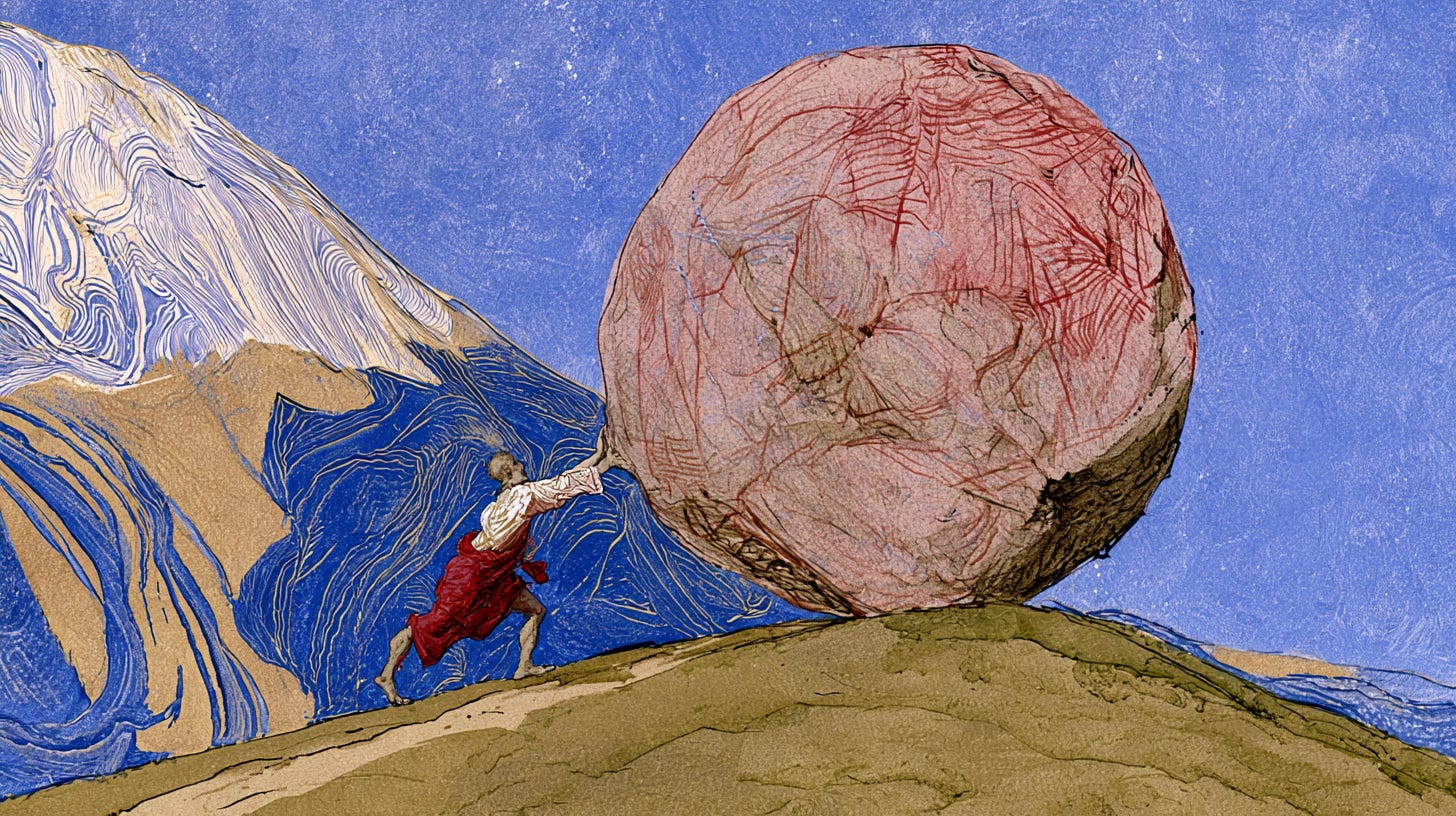
Finally, I might even use willpower to type those very first words. The place where a well-calibrated amount of self-coercion makes the most sense is the beginning of any task. I call it “getting over the hump”, the activation energy required to get anything going.
Most “discipline” should rely on the more sophisticated structures, ideally just on the natural reinforcement of the feedback loop. The feedback loop can even work immediately, by reinforcing activities that feel good. A favorite of mine for working out is to just start with a simple movement that feels good such as spinal waves or gently bouncing into a squat, and only continue as long as it feels nice. I routinely end up working out 20 minutes or more without using any willpower. The key is that the present self is in the driver’s seat. I choose whether and how long I want to work out. There is no Big Should.
May I trust myself
Living from a place of self-trust is scary. A part of me is still afraid that I’m endangering my hard-won meditation chops by letting go of the rigid practice regimen. I’m writing this to remind myself that the only thing required to make this work is to pay attention. I want to stay curious about what the next cookie or the next sit will actually do to me. Getting it wrong is part of the process, and every time I do, I send the information across time. It’s much more chill to finish a piece a day before the deadline, but I’ll stay up until it’s shipped. Tonight that meant 3:31 am. No hard feelings, bro.
Ink trails:
Every deadline I keep cuts a will-line into the future
Fitting scaffolding are structures that allow for spontaneity
The selves multiply sideways too, not just across time.