

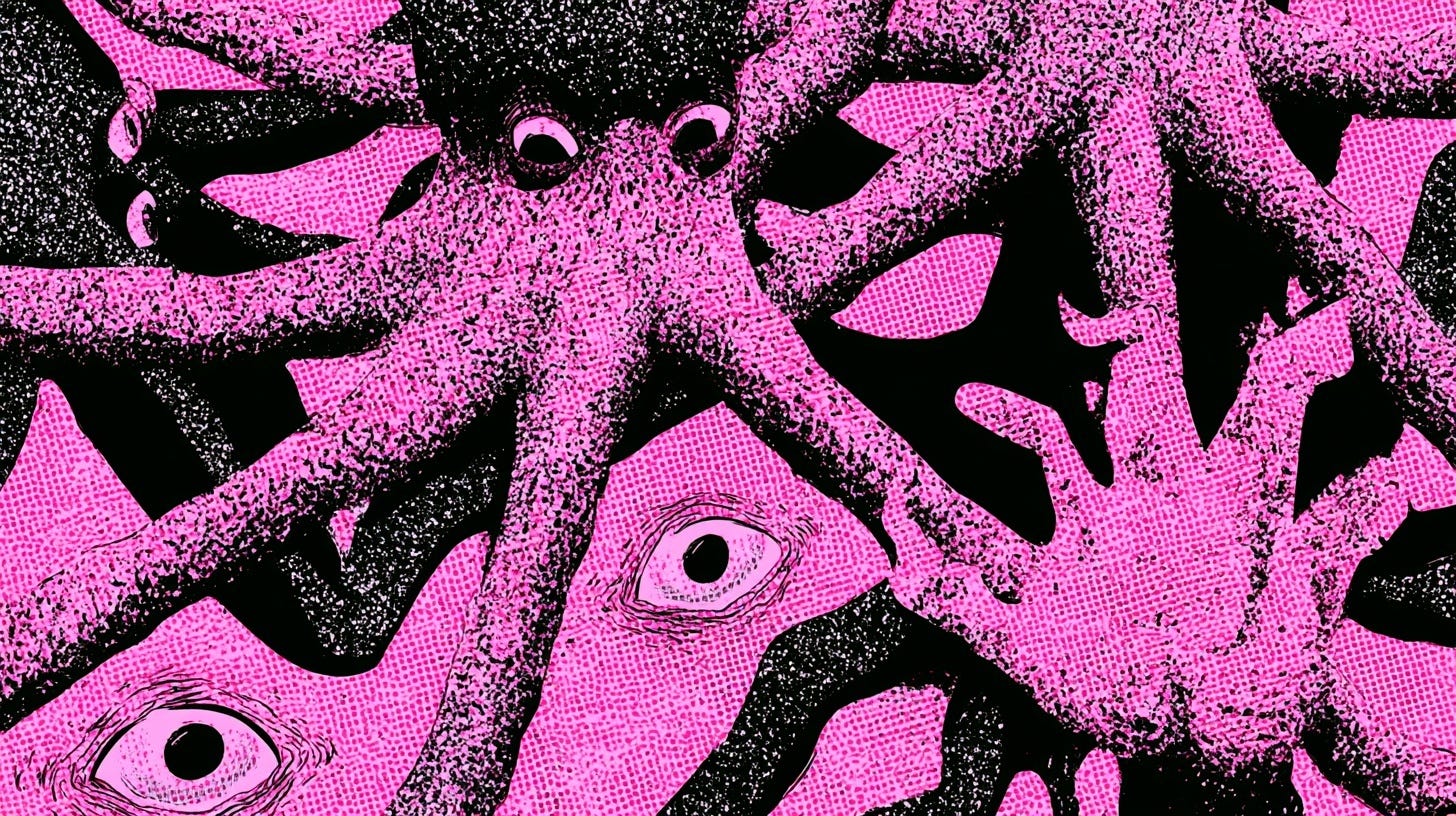
You secretly like slop. Some of the top performing articles on Substack are written by AI. A judge of the Commonwealth Prize for short stories praised the “precise and richly evocative” language of the apparently machine-generated winner.
But that’s not you. I know that as a reader of Octopusyarn, you have exquisite taste. You’re the kind of person who enjoys fish sauce caramel. In fact, you hate AI writing. If a single sentence sounds AI generated, you lose interest immediately. Taste is a kind of attention, and yours has been trained by everything you refused to finish. And you’re right in principle, even if that attitude costs you in practice.
I’m glad you’re still reading. There was one AI-generated sentence in the text above — I dare you to find it. I keep sharpening a Claude skill imitating my voice even though I don’t let it touch my essays anymore. That’s because I figured out how to use AI to become a better writer without letting it do my writing.
The view from language
Nobody has complained about the Midjourney images in my pieces. In an image, what you see is what you get: The form is the content, arriving all at once. Writing needs credit upfront since you are piecing together symbols into simulated vibrations and following where they point, hoping there’s a thought at the end. You’ll need some indication that it’ll be worth it.
Providing quality signals used to be easy. In the middle ages, people believed almost anything because it was written in a book. Before AI, people relied on compelling language with rhetorical forms and punchy sentences to choose what to read. Not anymore. The same way the printing press unleashed writing from the venerable book hand-copied by monks to leaflets with the pope’s bare butt on them, AI has made good™ writing cheap to produce, so it ceased to be a signal of importance. What Kandinsky and Klee figured out for painting once representation was automated by photography now holds true for writing: Weird techniques, even moderately bad style, have become a better signal than flawless execution.
The machine writes from language itself. Probability distributions over every sentence ever written, predictable even in the ways it tries to surprise. Heidegger called it das Man, the perfectly average view. The view from language is a cousin to the view from nowhere academics aspire to, speaking from everywhere at once. Everywhere is not a perspective.
AI writing disqualifies exactly where a situated person is the point: an essay, a book review, a birthday message from a friend. It’s perfectly fine for texts not meant to be read by a person at all: the government form, the academic paper.
The trouble starts when the machine reaches for beauty, it makes the same move every time: imbuing inanimate things with minds (you can’t make this shit up). Sam Kriss sees through the remembering limestones and chiastic reversals of AI writing because he can smell the lack of pathos.
“The forms that will remain inviolably human are the racist tirade, the queasily specific pornographic fantasy, and the death threat”. — Sam Kriss
The racist tirade, the pornographic fantasy, and the death threat are maximally situated. It’s my particular history and context that created my stereotypes, my kinks, and the rage at that particular asshole. If I slip and let the slop in, you will start to question whether there is a real person sitting across from you through time and space or just matrix multiplication. And that’s why you have good reasons to discredit the whole text after seeing that one too many em-dash. In writing, the form carries the content. Every sentence is not just a wrapper to deliver its own message — it’s a promissory note for you to read the next one (don’t leave me).
The slippery slop(e)
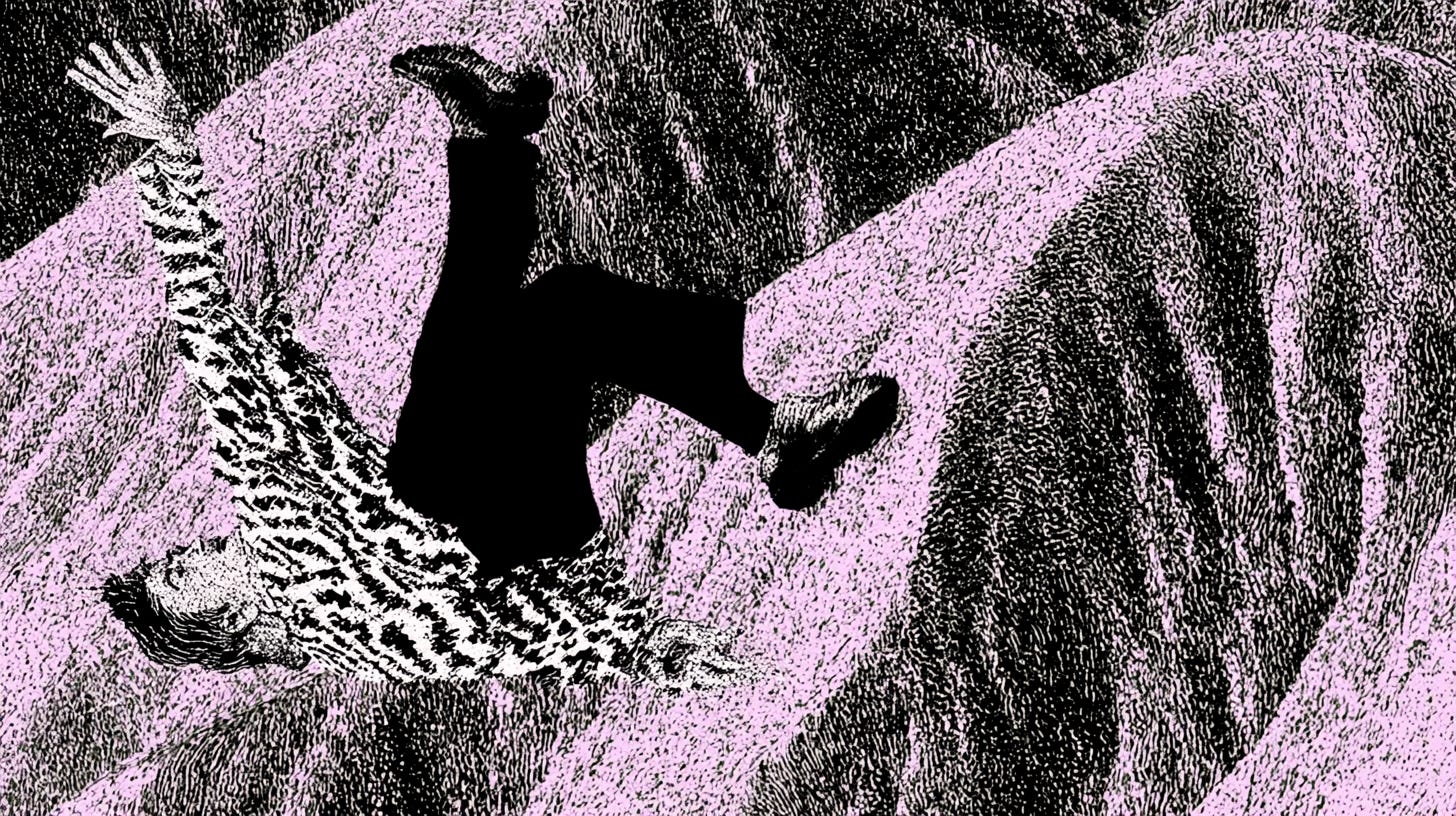
Last year, I gave you plenty of reasons to unsubscribe. After getting drunk on the deluge of language, I have sinned. I let the robot defile my sentences. I succumbed to the mic drop energy of the reversal and published “Nietzsche wanted the Yes without the mercy. But the Yes has always been mercy.” Right as the conceptual buildup was supposed to pay off. Exactly as Kriss predicts, the temptation peaks when the writing is hardest. He should have come to my house and killed me.
My only defense is that it happened gradually. I swear I started with line-editing only, catching typos and leaky grammar. I then moved on to voice suggestions: where to add some levity to hit that sincere irony sweet spot. Until, at some point, a ready-made sentence glossed over a hard transition with enough quick-witted smoothness that I couldn’t resist it. Yes, have mercy. I was well underway to Sloptopusyarn when Konrad and Guy called me out on it, saving me from “structural” becoming load-bearing rather than decorative in my vocabulary.
For a few months, I thought that AI could provide the form for the ideas I wanted to deliver, that it might help those ideas spread by formulating a more persuasive wrapper (and do it faster). That’s the tragedy of the slippery slop(e): I suspect the temptation to hand over the form to the machine to get the content out is greatest for writers with impatient backlogs of ideas. By outsourcing the final ten percent (which they thought to be the packaging), they discredit themselves in front of discerning readers who vet the content by the form. I let Claude write the final paragraph of the conclusion of my essay on privacy:
“Privacy isn’t about hiding your browser history. It’s about preserving the space where souls can actually develop. In a world obsessed with transparency, opacity becomes the ultimate act of rebellion. Not against society, but for it. The confession booth knew something we’ve forgotten: the most sacred conversations happen behind closed doors.” — Sloptopusyarn
The confession booth knew: Such cringe. With eyes trained for another year, the cascade of restatements through contrast is obvious. In more innocent times, when I slapped this into my poor precious piece, it seemed to sound like me (or better, what I wanted to sound like). But interestingly, even a few weeks after publishing, I got a foul feeling on re-reading it. It was my first encounter with a new kind of slop, not obvious like hands with six fingers or grammatical tics. It leaves a plastic aftertaste.
I call it “Fluff”: Rhetorical sugar puffed to a deceptive volume like cotton candy.
Fluff might increase reach through its smooth palatability but it also ensures the content won’t land because it never hits the body of another person. Like the vitamins in Athletic Greens that never make it into the bloodstream but make you piss like Shrek (I did that too). Character-based prompting, context, and skills may be able to simulate a perspective. But they will never be me, in a dark Airbnb in Istanbul, digesting a year of experiments for next week’s workshop, typing at you in shrimp pose.
Blood in the ink
AI is a great writing partner precisely because it’s worthless as an essayist. I came up the other side of the slippery slop(e) by using AI as a foil instead of an extension. The view from language tells me what anyone would say, and querying das Man clarifies what my own perspective is. If you’ve ever written a voice skill, you probably built it to get output you could paste. I regretted every time I did that except for a few snappy subtitles.
I continue improving the skill because comparing my writing with the simulation of it creates the best possible standard to beat. Reading a simulation of yourself is uncanny, slightly unpleasant, and almost forces you to the keyboard to correct it. I want Sloptopusyarn’s narrative thread and its jokes, but with some blood in the ink. Which means the sentences stay mine, especially the bad ones.
The specificity of my own life can ground the arguments or open up a research direction. I’ve never actually tried fish sauce caramel. I did experience the surprise of plum jam giving Gruyère depth, and that category went into the prompt to find something fancier. Yes, I felt compelled to fabricate a more flamboyant culinary example for an essay about the compulsion to prove my taste.
Where I use AI the most is before and after the drafting. I start a new piece by dumping messy notes and spoken rambles at Claude and we iterate until arriving at a bullet-point skeleton that scaffolds the draft. After the draft, I edit with AI, but with guardrails in place for it to point me back at my own experience. Every session produces a learning log that improves the context files and skills in the system. That process is what happened with this essay, even if I can’t prove it to you. Just as you don’t know whether I’ve written this, I don’t know whether you’ve read it, either.
Writing as digestion
I’m not writing from experience just to keep your interest. Writing from my own perspective is how it works as digestion. Every time I weave ideas that light me up with experiences that shaped me, I feel a bit lighter afterwards. A decade of podcasts, books, and repression has created enough constipation that I could keep going for years even without any new impressions. You’re getting the fresh stuff because AI is kombucha for this process: I can finally maintain a note taking practice because I ramble at Claude who then links up the Zettels in my Obsidian. But the conversations influencing my writing the most are with humans I care about. Most of my best pieces got launched by bumping up against my friends’ points of view. And if there is something worse than letting AI do your writing, it’s having those conversations to get writing material, instead of writing to digest the impact of the conversations. That’s what I’d come to your house for.
Did you guess the sentence? “Taste is a kind of attention, and yours has been trained by everything you refused to finish.” You probably missed that the apparently interesting comparison in the first half was just a conflation because it flattered you in the second half. The caramel example came from the same chat window, after it asked the third follow-up question. Both were fabricated, but one added fluff to string you along while the other exposed that I still haven’t digested my vanity.
You won’t be able to tell where sentences came from anymore. My teacher friends are telling me their students are starting to sound like AI on hand-written tests. At some point, slop won’t be slop but just how the kids talk now. The models recursively train on each other, until language grows a Habsburg jaw and can’t chew its own food. On the internet, nobody knows you’re a Claude.
Stop playing Pangram. The question is whether the words entered your bloodstream. That’s the difference between one more corner of the simulation and encountering another person, with an experience just as complex as yours, but oh so deliciously different.
Ink trails:
AI-native art is conversational art beyond writing
Form can attract content through vibestition
Walls of slop are a sign something valuable is hiding
I understand what you've said here, but what if I don't like the feeling of being cheated? What if the words that hit my bloodstream turn sour and poison me the moment I realize those words were stolen and sold to me by evil men, and then repackaged as someone else's soul? I don't like being cheated, and I don't like the idea of people normalizing more and more degredation.
Language growing a Habsburg jaw 👌